Tuesday, 19 November 2013

Yorkshire Sculpture Park...

Amar Kanwar: The Sovereign Forest + Other Stories

visited 17/11/2013
In the inside galleries of the park there was one exhibition which I found especially brilliant. In the 4 rooms were a collection of large scale video projections and artefacts. The middle room was a large room with the back wall full of small containers, filled tot the brim with grain. Each one individually named. There was then a series of small open books of photographs and text positioned around the room. The viewer was encouraged to look through these books.
There was also 3 large books made from hand made paper. In the paper was materials relating to a specific story. One had pieces of rope from nets woven into it, another made of banana leaf. A film was then projected from above onto the large textures pages of the book. This was really beautiful how it was presented so clearly and along side the writing in the book.

My favourite aspect of this exhibition was how the room had been curated. As soon as you walked in you were immersed in the beautiful clean and concise room, full of intriguing information. I think I could have spent a lot of time in there. i will remember this exhibition if I am ever to curate a room or just in the displaying of my future work. 
Although this work is concerned with exploring issues of farming and mining in the Sovereign Forest, and this is far from my current topics, the focus is on how this had an impact on people. It is this connection between art and social cause which I am very interested in. I found this exhibition fascinating, for its content and also it supported my opinion that the use of video can be very powerful when exploring social and political causes within an installation. 


Sunday, 17 November 2013

Art Action and Participation...


Popper, F. (1975). Art~action and participation. London: Cassell & Collier Macmillan Publishers Limited.
(popper, 1975)

Although this book is by no means contemporary I wished to look at it for fundamental approached to this type of work, and reasons behind why it started. 

This is a book I am currently reading, It describes why artists choose to create immersive environments (happenings) rather than work in a tradition gallery approaches. It is aimed at the impression given to the viewer if they are involved in the installation rather than just view it. I am finding this book very interesting and I feel it underpins a lot of my ideas to do with my current project. Here are a few quotes I found particularly fitting:

‘What does the Nouvelle Tendance aim for?
Our aim is to make you a partner
Our art is based on reciprocity.
It does not aspire to perfection.
It is not Definitive, always leaves the field open between you and the work.
More precisely, our art depends on your active participation.
What we are trying to achieve is for your joy before the work of art to be no longer that of an admirer but of a partner.
Moreover art does not interest us as such. It is, for us, a means of procuring visual sensations, a material which brings out your gifts.
As everyone is gifted, everyone can become a partner.’ (popper, 1975 p.15)
This book explores the various attempts artist have taken ‘acting often as mere intermediaries’ to create environmental statements and, in one way or another, to implicate the spectator in the aesthetic process (popper, 1975 p.13)

‘This creative act, or rather these creative acts, will only come to fruition as a result of the development of a climate which is favourable to awakening public creativity.’
(popper, 1975 p.278)
I wish to encourage people to be creative in my work and use this creativity to reflect on their environments. To do this I need to make sure that the environment is suitable. 


Saturday, 16 November 2013

Artist in Pubs...

I attended this event on Friday 15th November in Leeds.
It was in a nice little back room of a pub, I think more people attended than were expected so it was quite cramped. It was a very informal atmosphere and the artist sat at the bar and explained a bit about his work, then took a few questions

Henry Moore Institute events announcement 
Friday 15 November 6-8pm
External event at Whitelock's Ale House, 4 Turk's Head Yard, Leeds LS1
6HB - http://www.whitelocksleeds.com/

'Art History in the Pub' - Paul Becker, The neglected and wholly
fictitious British sculptor, Anton Lesseman 

Collaboration with the Association of Art Historians

There was also a handout of images that related to what he was talking about:


Listening to the artist talk about this character he had created was fascinating. At first I was a bit sceptical about this idea as I wasn't sure if it was kind of unfair for a viewer to think it was a real person. But after he explained that he is not interested in trickery. There is no doubt this isn't a real person and he isn't trying to fool anyone into thinking so. I was amazed at how much depth he had gone into writing a 200 page biography for Anton Lesseman, drawings, sketch books, diaries. The final work is archived in the Henry Moore archive.

One point I found interesting was how he came up with the idea. Having creative block and not being able to work as yourself. Taking yourself away from your normal way of working and generating an alter-ego in a way, I feel this could be a great tool to experiment and motivate a person to creating different and interesting work to what they normally do. 

I have to admit some of what was said I didn't quite understand. There was a lot of highly trained arts people in that room including the head of archiving at the Henry Moore institute and head of the institute! It was really interesting hearing their input at the end and a lot of really innovative questions were asked to the artist after the talk. I think the questions at the end were my favourite part of this talk. 

One man talked about student writing dissertations and questioned if the approach to this would be more interesting if they did it from the point of view of someone else. A made up character, I found this an exciting prospect which could have interesting results.

 Although the subject matter of this talk was quite different from my current practice I enjoyed interacting with the people there and I found the artists approach unusual and exciting. This talk has opened my eyes upto different ways of approaching creating artwork.  


Wednesday, 13 November 2013

Projection ideas...

I wanted to experiment with different surfaces to project onto as another option for my exhibition:


After experimenting with different areas of the room, It felt too industrial to display a journey in this way and It wasn't relevant to project a journey like this. I decided that the projecting onto the fabric worked the best and was also the most practical as I want to viewer to be able to walk through the projection. 

I then went to to experiment with blocking the projection. The video is not the most important aspect of this installation and as I am looking into the topic of being lost I thought about distorting this projection further creating a barrier:


For this test I used myself just to see how effective it would be. But it gave me the idea that I could use a map outline to create a shadow on this but at the moment I am unsure whether this would just unnecessarily complicate the exhibition. 


Tuesday, 12 November 2013

Pipiloti Rist...


Rosenthal, s. (2011),Pipilotti Rist: Eyeball Massage. London: Hayward Publishing

Pipiloti Rist was as the forefront of the video art scene in the 1980's, she is known for her experimental video projections encompassing ideas of femininity, the body and fragility.

'she has created video projection works that are remarkable for their mesmerising imagery and cinematic verve, their gleeful and visceral poetics.'

'her early work often humorously toyed with conventional images of women and feminine stereotypes and she has continued throughout her career to vividly rewire our habitual ways of looking at the human body, while evoking the liveliness of vision itself and its links to sensual delight, her art comprises a passionate engagement with the physicality and fragility of our existence.'
(Rosenthal, 2011)

'when I set out to describe Rist's work, it's as though I am floating in another world or entering an impenetratable forest of images and experiences. The saturated greens, over-ripe fruits and lush blossoms overwhelm me; dark unfathomable overgrown regions appear uncanny and alien. Flowerbeds evoke a sense of joy and burgeoning life.'

Her work is highly visual, bright colours, exciting post editing video displays. She is also working with issue based ideas. I love how she atracks audience attention with her very clever creation of video but also how the viewer becomes a part of a lot of her works, and they each see the video a little bit differently

This is my favourite piece by the artist:

Ever Is Over All 1997. Installation at centre of contemporary art Ujazdowski Castle, Warsaw.
 

Explanation
In order to delineate more closely the psychoanalytic dimension subtending Rist’s artistic double voicing, I turn to a second video work. Ever is Over All (1997) begins with a rapid pan upwards along the stalk of a flower, which in the subsequent themes, comes to serve as an instrument for gleeful feminine destruction  Armed with this phallic flower, a young woman walks along a sidewalk in slow motion, smiling, swings the flower up and down the length of her body, smashes windows of cars, looped video. Accompanied by sound of humming feminine voices, interrupted by breaking glass. Policewoman salutes, endorse forbidden act, more destructive.
‘The two female figures emerge as dopplegangers, embodying the mutual implication of the law and its transgression.’
(Rosenthal, 2011 p.118)

Analysis
‘Rist creates a play on the idea of what it means to be upright in both a physical and moral sense’
‘The dyptic performs a complex anagrammatic body because we are invited mentally to splice together the flowing movement of the tracking shots (which fragment the flowers into poignant details) with thelow motion shot capturing the womans dance. Thus while appropriating the voyeurism of fetishism also meditation on movement.
Freuds penis envy
Fallic flower, stem differentiate between two sections of the film and introduces a second woman,
First section focusses on  ‘clandestine voyeur to whom no one pays attention,
Second section focusses on the ‘site of origin for the woman’s violence’ focussed on the movement of the flower
‘the cinematic magic in the second part recalls Hitchcock’s analogy between the voyer’s eye and the camera by capturing on screen the movement attributed to the flower-weapon
Double vision
‘Second section shows an enactment of transgression on the level of the cinematic medium itself. ‘
(Rosenthal, 2011 p.118-119)

Although Rist is being influence by different issues to my won work, I wanted to explore her work in more detail because of the way she uses video so explain her cause and also her use of immersive environments.
This artist is a big influence to how I approach making videos and also the set up and display of my final environment. 


Monday, 11 November 2013

Abha Dawesar: Life in the Digital Now...


http://www.ted.com/talks/abha_dawesar_life_in_the_digital_now.html

This is a fascinating talk By The novelist Abha Dawesar, I feel it encompasses my current project and explains that there is a need to address these issues of living in the digital world and loosing connections with the physical world. It is an issue and this now, present and increasing. This talks supports my own opinion and addresses some of the issues which in my opinion are dehumanising us at an alarming rate.

Key points:

  • The self no longer exists
  • The author was effected by hurricane sandy, she had no electricity like half of her town, she explains that, her included, were desperate to go into coffee shops to charge their appliances, "being wired is up there with food". This was a very strong point, in our world now we rely on technology so much, this put things in perspective for Dawesar and is what encouraged her to think this way. 
  • There are more people in India with access to phones than toilets.
  • Technology altered the flow of time
  • We are never going to know what it is like to comprehend a millionth of a second yet computers get more and more developed and we record more data that the human brain can never comprehend
  • We answer only to natures flow, to the rhythm of the sun, but technology allows time to warp
  • we need times arrow to understand cause and effect, not just in the material world but in our own intentions and motivations
  • time doesn't flow in the digital world like it does in the physical world
  • We live in the digital now, the challenge is to live in two streams of time that are parallel and almost simultaneouss.
  • How do we live inside distraction
  • she remembers being taught about the planets by her grandad when she was a child, getting on his shoulders and interacting with him. Now a child could just google that information but that is not the same kind of learning. 
  • now a days everything is archived, we clutch to static moments, love is attention,
  • The digital world cannibalises time, and in doing so it threatens the completeness of ourselves, threatens the flow of love
  • We can slow down and tune into the flow of time, we can choose to take time back

My interpretation of this talk is that, this information is in no way saying that all technology is evil and we should regress back to chalk boards. It is addressing the issue of dependence on technology getting in the way of what it is to be human. the digital now is always ahead of  time, we are human and our time is physical it is easy to loose these physical connections to time and in doing this we loose the attention and the flow of love, dehumanising us. 

It is this connection to the physical world which I am interested in approaching from an artistic perspective. My aim being to create a short restbite away from technology and fast paces living, and rebuild some of these connections to the physical world. I believe these connections are what keeps us human.  

Thursday, 7 November 2013

Isabel Pradilla...

Isabel is a Textile Futures MA student, who works with conceptual concepts. 

This project is interested in how constant reliance and dependence on technology is causing people to become superstitious.

"The Future Amulets project explores the concept and apparent contradiction of technological developments giving birth to superstitious beliefs and devotions in our hight-tech everyday life."

Isabel is exploring ways of creating boundaries between technology and ourselves. enabling people to disconnect from their 'online lives' and connect more with their physical lives. 

 She found inspiration from a book called Future Amulets, which is a journey of a superstitious time traveller of the future travelling back in time. He explores The Seventh Kingdom of life , technology and collects amulets found on three different technological phases during his journey: digital voodoo,soul keepers and future dream catchers.

Digital Voodoo


      FUTURE AMULETS
      PHASE ONE: Digital Vodoo
      Date: circa 2013
      Place it was found:
      Offices/households/inside peoples bags.      Use:
      Used to make vodoo to cellphones,
      cancelling reception by sliding them in the
      leather bags.
      Individuals associated with this object:
      Technology anxious men and women, over
      24most of the time.

      Materials:
      Steel wool linning/leather/hair to pull when in
      desperation/pins to hurt device.

      Process or Processes:
      Faraday Cage.
      General comments:
      These items were used by people who were going
      mad and desprate because an over-comunication.
      It was an attempt to reduce the anxiety that
      technology started to produce.
This idea was to stop the phone from working and being constantly checked by placing it in this 'voodoo' bag which cancelled the signal. I like the idea of creating something to intervene. People are often glued to their phones and check them so often that it gets in the way of living, although I am not interested in producing a product this projects aims are similar to my own. This is a different approach to similar issues that I am looking into and I feel it is a worth wile cause and a topic that does deserve looking into.
when I first looked at this work I assumed it was just a leather bag to put a phone in, and I thought the phone would still go off from inside, but this bad actually blocks the signal, I think this is a new approach and is much more effective. 

Intervention of technology dependence through textiles...

Body Stories Turvey World Dance...

Gerry Turvey is a performance artist who likes to work in collaboration with other artist
In this piece she was working with a film maker, Visual artist, sound engineer, and a choreographer.

I visited this installation and found it really exciting first of all for its visual effectiveness. It was an immersive installation in a room setting, there was different elements to this piece including a wall of written tags, video projection, video, and framed pieces.

I am interested in audience participation, immersive installation and use of video so I found this exhibition interesting to see how the artists presented their work and why they did so in this way.
This is the whole room view and the artists can be seen in the doorway. I talked to Gerry Turvey for a while about the exhibition and got some interesting answers:

Why did you choose immersive installation? 
Because I had the space to do different things, I didn't want to work on my own, I like to collaborate with other artists so this way lots of different elements are present. I have never worked with issue based topics before
What do you mean, you have never don't issue based work?
I mean in this work I am addressing issues about body stories and injuries to the body, normally I don't work with topics like this, I don't work individually I work in collaboration
Why did you choose to use video?
Because there is something that cant be captured with a performance, and also the video can be used, edited and manipulated after. 

I have asked to meet up with the artist at a later date, and she seems happy to do so, so hopefully I can get some more insight into her approach and ideas about my topics of interest including:
  • installation
  • layout
  • cause-led work
  • video
  • projection and video manipulation
  • collaboration


Use of video projection onto a different surface to a flat wall

Wrapped up images, this reminds me of blood and aswell wrapping with bandages.


Hanging frames, attached together with bright red thread, this use of 'the red thread' is often key in exhibitions as I have researched into this previously 

Clip including sound of what will be shown in the performance

Opportunity for the viewers of the exhibition to write a tag of their own body experiences and these are added to the tag wall. 

I am going to the performance tomorrow evening, I think this is going to be really interesting to see the other side of this work, the performance side rather than the installation. 

Wednesday, 6 November 2013

Outside Workshops..

I wanted to explore other options of how I can develop my idea outside of an exhibition context...

My Ideas:

  • Use GPS tracking devices/ phone apps and encourage people to draw with the lines they are creating
  • A treasure trail for adults, create a set of rules, a booklet, an app, that encourages people to do lots of interesting activities on a walk for example stop and pick up..., draw... record what you can smell... how many colours can you see... what is the road name... this could be good but as it is so cold now it is going to be hard to try and get people to want to take part
  • This does give me an idea of how my touch glove could be part of this project. This could be one of the tasks, a sound could play and the participants task is to put the glove on and touch things until they find that specific sound. 
  • I could ask people to take loads of photos then I can make videos for people individually on their journeys, I don't like this idea as although it would be using the participants journeys I don't think they would get that much use out of this video and it could be easily forgotten. 
Thinking about these ideas, if this is a workshop setting outside, I will ask people to come to a specific place to complete the workshop, this is a place I have picked and it isn't their own surroundings. Yes it is getting people to go outside, but my aim is to encourage people to pay more attention to their own surroundings, journeys they take all the time, so this approach doesn't fit my aims and this is why I am going to stop this avenue of investigation

I think having pop up exhibitions in busy places like train/bus stations at the time when people are going/coming back to work would fit my cause better, but then the problem with this is getting the audience interested!

Big Data...

I was interested in looking into big data as it is obviously a growing point. there is so much data collected from so many sources now. Technology keeps developing to accommodate this data but our brains are never going to be able to comprehend this.
We never had any of this years ago and the amount is just increasing and increasing. Everything we do it recorded, analysed.
This Big Data can be used as a tool to make things better, as everything is recorded there is a more accurate knowledge of exactly what is needed. However the other side of this argument is that there is no privacy in the worlds, people are sucked into online worlds. Is the increase in technology stopping people from enjoying their surroundings, and disabling connections through hands on engagement.

I do believe that connecting with other people and connecting with your surroundings if part of being human. The technological advances could be dehumanising us.

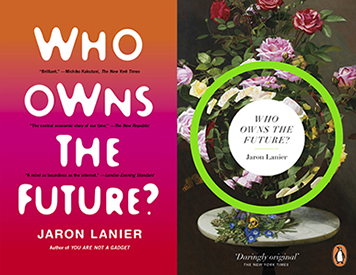
I am currently reading the book Who Owns the Future, and finding it fascinating.

Are we lost in the places we know like the back of our hand?

Tools to get people to explore their environment...


Use of play as a tool to get people to interact,
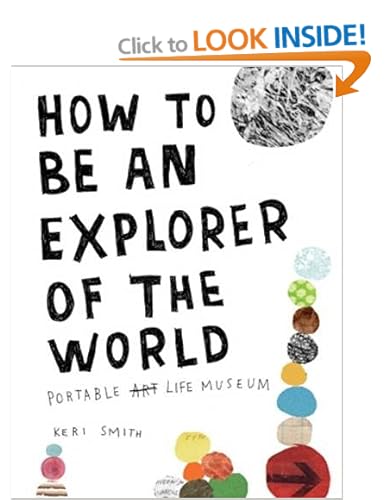
Keri Smith has a number of books, there goal is to encouraging creativity by using games and interesting approaches.
This book is no exception but it is more based on outside interaction with peoples environment. I am interested in seeing how this book can be used for a range of ages not just children. I know I am excited to use it and this proves that it is an enticing tool to get people to interact outside.

  • Could I produce some kind of book of things to do on a walk to encourage people to engage more?
  • Or going back to my ideas of using technology as a tool, I could create an app that does this? However this is not a possibility in 2 weeks!
  • Could I use methods of hacking peoples busy schedules some how to get them to take notice and slow down for a short space of time. like train station tannoys, music playing in shopping centres...
  • I need to make sure I am homing down my ideas now and not thinking of too much that I cant achieve!